Working progress

I am currently working on several new machines:

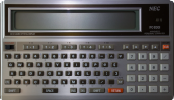
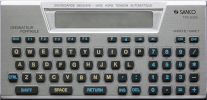
  • Tandy Model 100
  • Micro Professor MP-1P
  • Seiko UC-2200
  • Psion Series 5mx

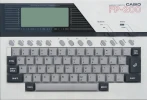
The Tandy Model 100

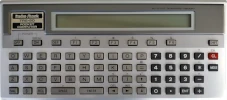
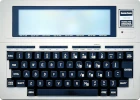
I believe this machine is an icon of portable computing. It is, of course, a clone of the Kyocera model and was widely distributed in the United States.

For a long time, I considered that a satisfactory emulator already existed (Virtual T), and therefore I did not see the relevance of integrating it into PockEmul.

Upon closer inspection, however, I realized that Virtual T had not been maintained for quite some time. That is when I decided to take on the challenge myself.

I have now completed the first phase, with a version that boots and runs correctly.


I now need to finalize the remaining details, including the I/O handling as well as the special modules developed by the community, and ultimately make the whole system robust and reliable.
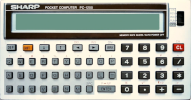
There is still a lot of work ahead.

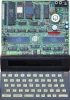
The Micro Professor MPF-1P

One of the iconic introductory machines of that era. I am not sure whether it was distributed worldwide, but in France it was heavily advertised and, I believe, met with a certain degree of success.

I have, of course, added the printer, and my long‑term goal is to allow users to click directly on the chips in order to swap them to install new ROMs with apps and languages (Forth, …).

I also created a small animation to reduce its form factor, making it better suited to the smaller screens of our mobile devices.

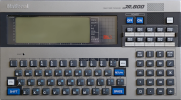
The Seiko UC-2200

The very first smartwatch!!!!

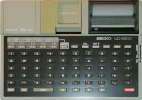
It could be connected to a dock containing a Z‑80 CPU, a printer, and an external ROM module, turning it into a fully autonomous computer.

In this configuration, the watch itself acted as the display for the computer.

One of the PockEmul enthusiasts managed to dump the ROM from the dock, and for now I am only at the very beginning of the work, as there is virtually no technical documentation available for this model.

A proprietary chip appears to handle both the keyboard and the communication with the watch. The same chip is also used in the UC‑2100, which is a keyboard‑only expansion.

The task ahead looks incredibly challenging.

I do not yet have access to the watch’s ROM, but I hope to be able to simulate it relatively easily—at least its display functionality. Its standalone operating mode, excluding time feature, is not a priority for now.

For now, nothing is visible yet—but trust me, it does boot!!!

If I succeed it will be a PockEmul exclusive. I believe this model has never been emulated before.
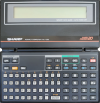
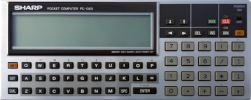
The Psion Series 5mx

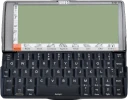
I have always found this machine incredibly appealing.

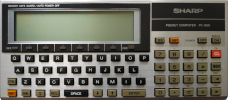
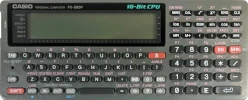
I know it is not an 1980s machine, but it is contemporary with some pocket computers such as the Sharp PC‑G850 or the Casio Z‑1 already emulated in PockEmul.

It is also autonomously programmable using the OPL language.

The goal, however, is to make its use as a PDA truly interesting.
To achieve this, I plan to provide Internet access through the host system (mobile or desktop) and possibly even synchronize the calendar and contacts with the mobile device.
I am fully aware that this may raise potential personal data security concerns. The responsibility will lie with the user—but it could be really cool.

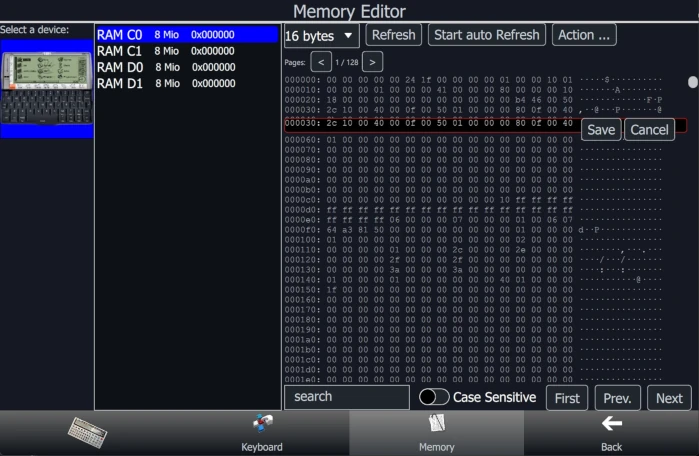
For now, it boots and I have to focus on the I/O (serial and IR) and the Compact Flash management.

Perfect emulation is an infinite quest. Please report us any inaccurate behaviour at contact@pockemul.com 

A message for our longstanding users and subscribers :
PockEmul is a 25 years passion project and a labor of love.
We invite you to share the passion and love for vintage computing.
Help us make history like these computers have done in the not-so-distant past.
Help us shape the future of PockEmul. Spread the word!

Leave a Reply

Your email address will not be published. Required fields are marked *